Rocket Launch Archive

United States · since 1958

NASA

From Mercury-Redstone and the Saturn V Moon rockets to the Space Shuttle and the Artemis-era Space Launch System: every launch NASA flew itself, plus every NASA science and crew mission launched on partner rockets.

330Launches archived
93%Fully successful
1958First launch
218Launch videos

Upcoming

Next NASA launches

Next launch

Aspera

No earlier than 29 Jan 2027 · Electron · Rocket Lab Launch Complex 1, Mahia Peninsula, New Zealand

Aspera houses an ultraviolet telescope and will examine hot gas in the intergalactic medium, thought to be contributing to the birth of stars and planets. Aspera will be the first NASA astrophysics mission to gather and map these ultraviolet light signatures, potentially unlocking a deeper understanding of the origins

  1. Soyuz MS-30Soyuz 2.1a · Baikonur Cosmodrome, Republic of KazakhstanTo Be Determined
  2. Crew-14Falcon 9 Block 5 · Cape Canaveral SFS, FL, USATo Be Determined
  3. Artemis IIISpace Launch System Block 1 · Kennedy Space Center, FL, USATo Be Determined
  4. Dragon CRS-2 SpX-36Falcon 9 Block 5 · Cape Canaveral SFS, FL, USATo Be Determined
  5. Dream Chaser CRS 2 Flight 1Vulcan VC4L · Cape Canaveral SFS, FL, USATo Be Determined
  6. COSI (Compton Spectrometer and Imager)Falcon 9 Block 5 · Cape Canaveral SFS, FL, USATo Be Determined
  7. JPSS 4 (Joint Polar Satellite System spacecraft No. 4)Falcon 9 Block 5 · Vandenberg SFB, CA, USATo Be Determined
  8. Dream Chaser CRS 2 Flight 2Vulcan VC4L · Cape Canaveral SFS, FL, USATo Be Determined
  9. INCUSFirefly Alpha Block 2 · Wallops Flight Facility, Virginia, USATo Be Determined

Schedule from Launch Library 2, refreshed every Monday and Thursday. Times shown in your time zone.

Rocket guide

NASA rockets

Every NASA rocket family, drawn to the same scale with a person for reference. Tap one to read about it.

0 m20 m40 m60 m80 m100 mEarly science r…24 mMercury28.7 mScout25 mSaturn I55 mApollo tests26.2 mGemini33.2 mSaturn IB43.2 mSaturn V110.6 mSpace Shuttle56.1 mConstellation99.7 mSpace Launch Sy…98 m
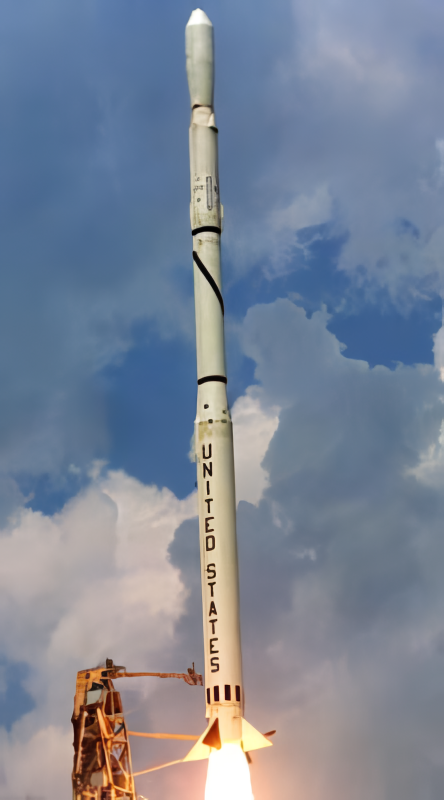
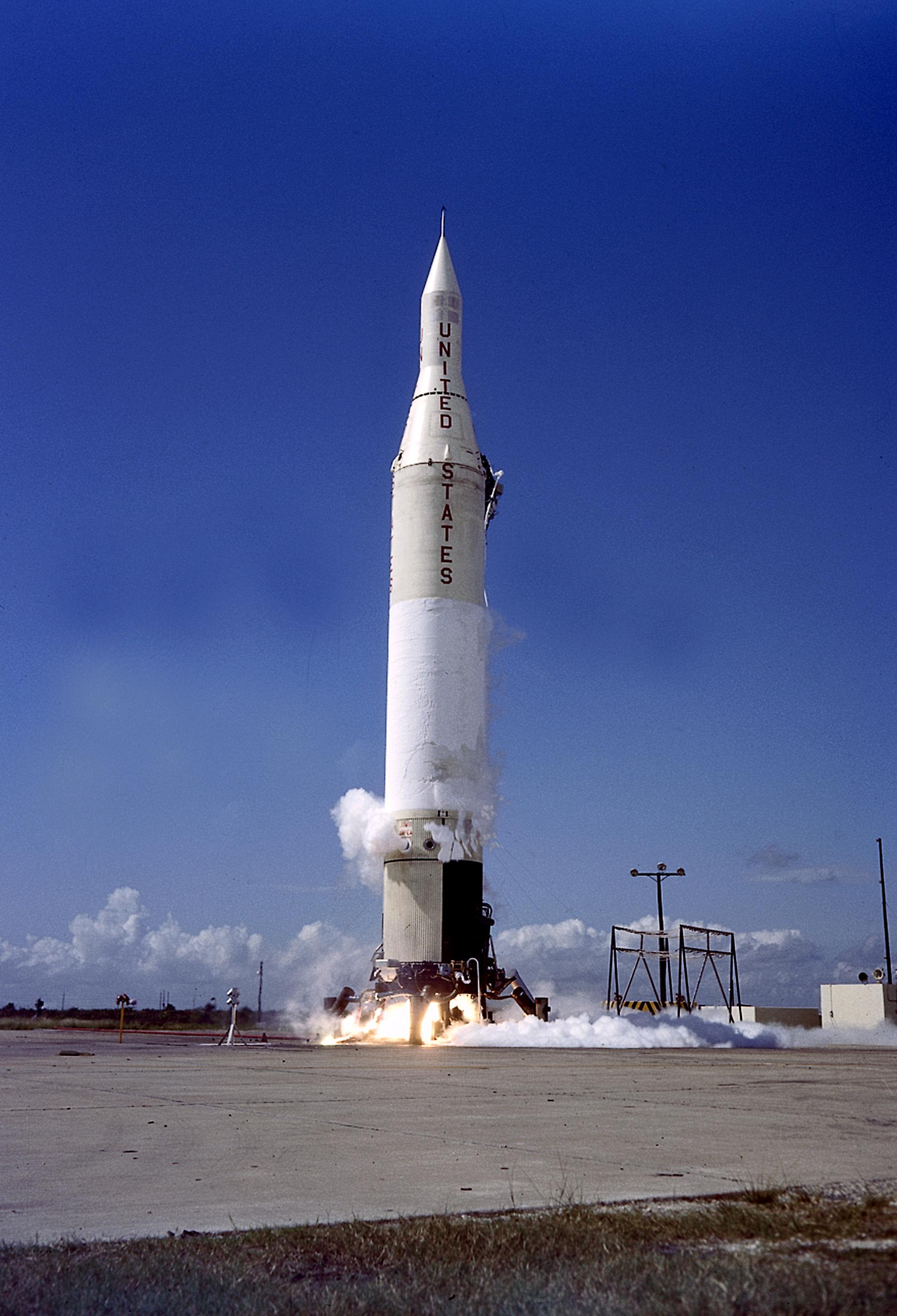
Juno II

1958 – 1967

Early science rockets

16 launches · 12 fully successful

Juno II was an American space launch vehicle used during the late 1950s and early 1960s. It was derived from the Jupiter missile, which was used as the first stage.

Height
24 m
Diameter
2.7 m
Liftoff mass
55 t
To low Earth orbit
41 kg
To GTO
—
Liftoff thrust
654 kN
Launches here
16
Fully successful
12 (75%)
Reusable
No
  • Juno II: 7 launches
  • Nike Cajun: 4 launches
  • Trailblazer 2: 3 launches
  • Trailblazer 1: 1 launch
  • Blue Scout II: 1 launch
See all 16 Early science rockets launches ↓
Atlas LV-3B

1959 – 1963

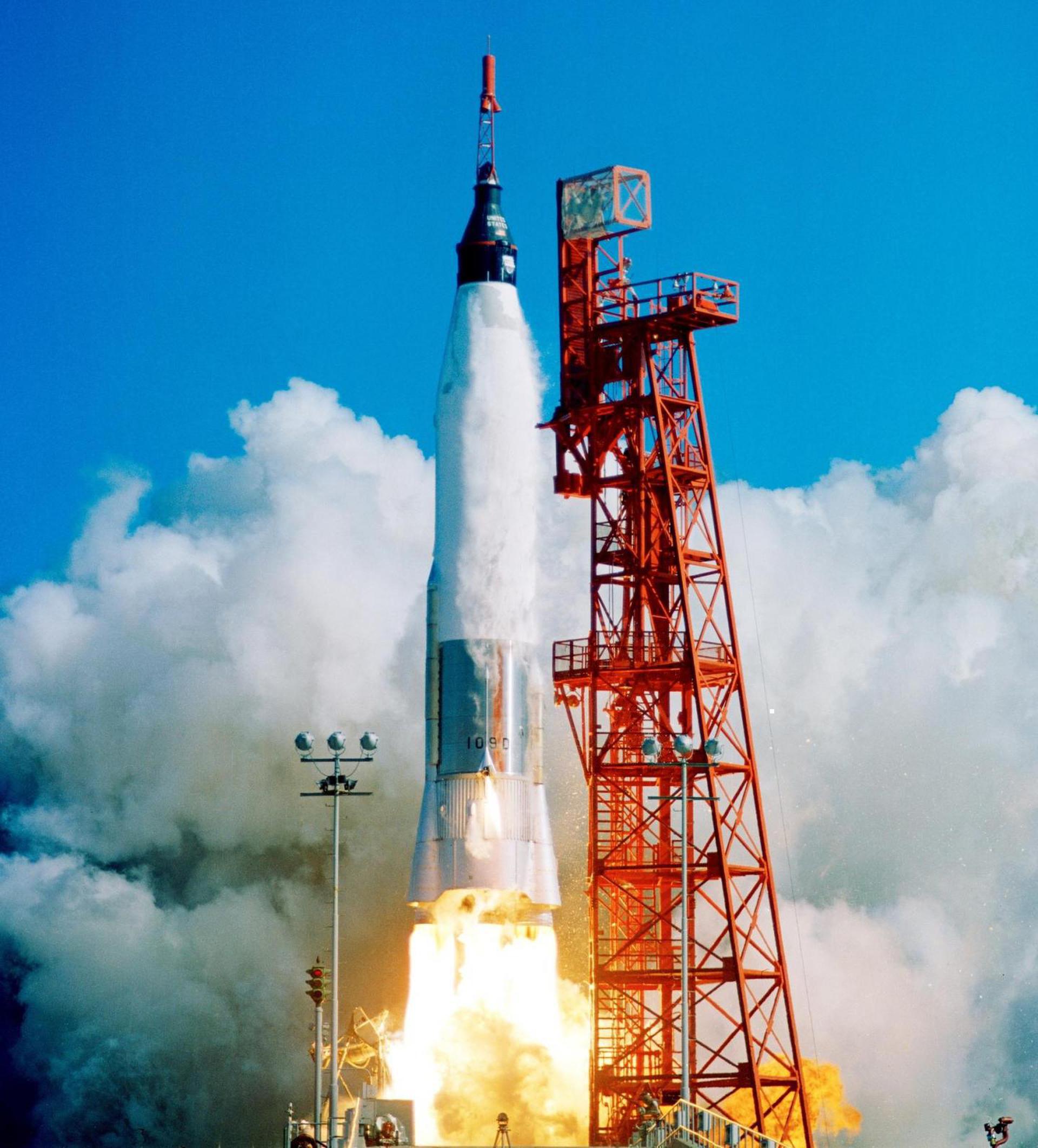
Mercury

The rockets that carried America's first astronauts.

The Atlas LV-3B, Atlas D Mercury Launch Vehicle or Mercury-Atlas Launch Vehicle, was a human-rated expendable launch system used as part of the United States Project Mercury to send astronauts into low Earth orbit. Manufactured by American aircraft manufacturing company Convair, it was derived from the SM-65D Atlas missile, and was a member of the Atlas family of rockets.

Height
28.7 m
Diameter
3 m
Liftoff mass
120 t
To low Earth orbit
1.4 t
To GTO
—
Liftoff thrust
1,300 kN
Launches here
24
Fully successful
15 (62%)
Reusable
No
  • Atlas LV-3B: 10 launches
  • Little Joe: 8 launches
  • Redstone MRLV: 6 launches
See all 24 Mercury launches ↓
Scout B
NASA

1960 – 1992

Scout

Small all-solid launcher, flown for more than 30 years.

The Scout family of rockets were were American launch vehicles designed to place small satellites into orbit around the Earth. The Scout multistage rocket was the first orbital launch vehicle to be entirely composed of solid fuel stages.

Height
25 m
Diameter
1 m
Liftoff mass
17 t
To low Earth orbit
143 kg
To GTO
—
Liftoff thrust
513 kN
Launches here
42
Fully successful
38 (90%)
Reusable
No
  • Scout B: 10 launches
  • Scout D-1: 8 launches
  • Scout X-4: 7 launches
  • Scout X-1: 6 launches
  • Scout G-1: 3 launches
  • Scout X-4A: 2 launches
  • Scout F-1: 2 launches
  • Scout X-2: 1 launch
  • and 3 more variants
See all 42 Scout launches ↓
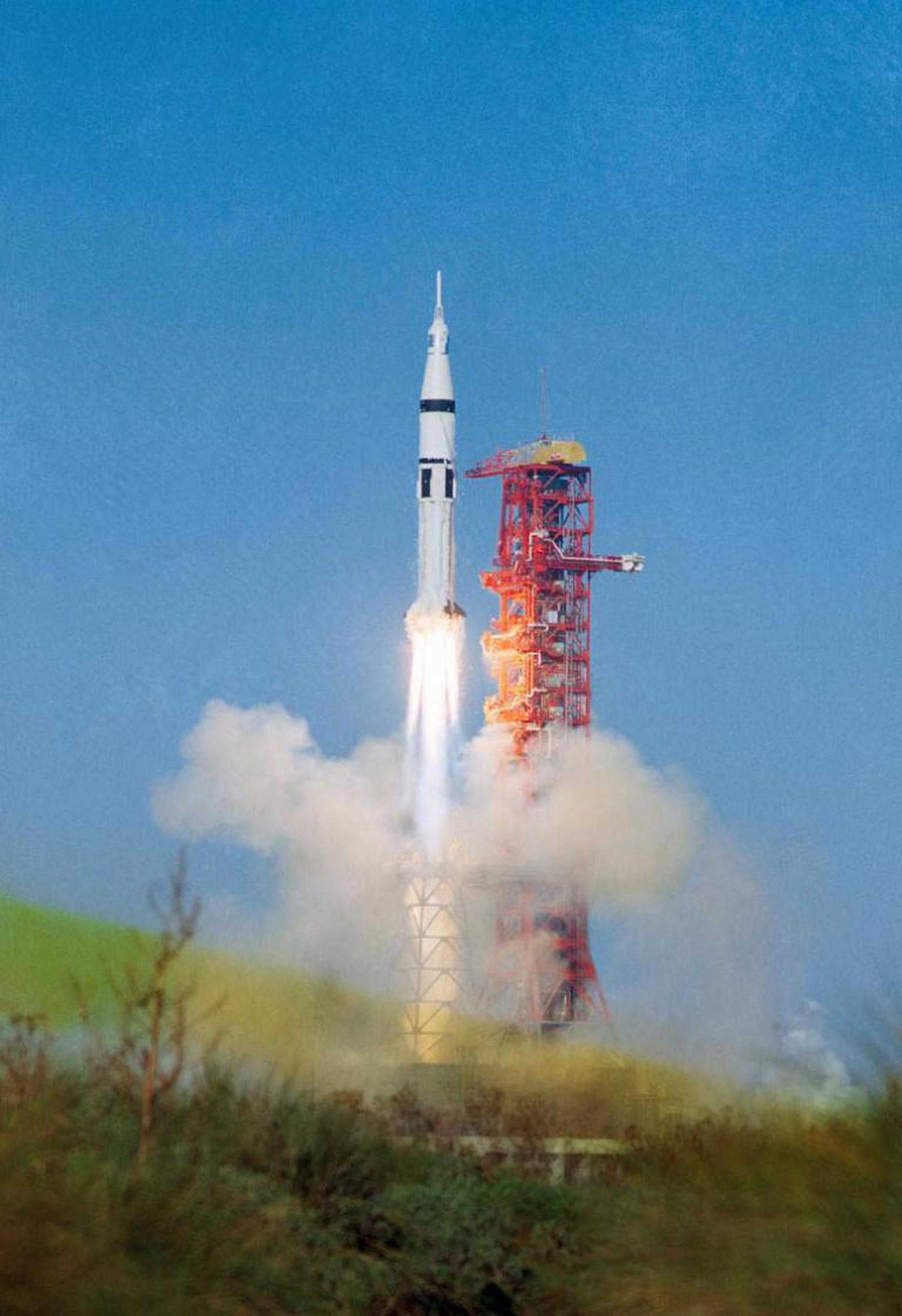
Saturn I
NASA

1961 – 1965

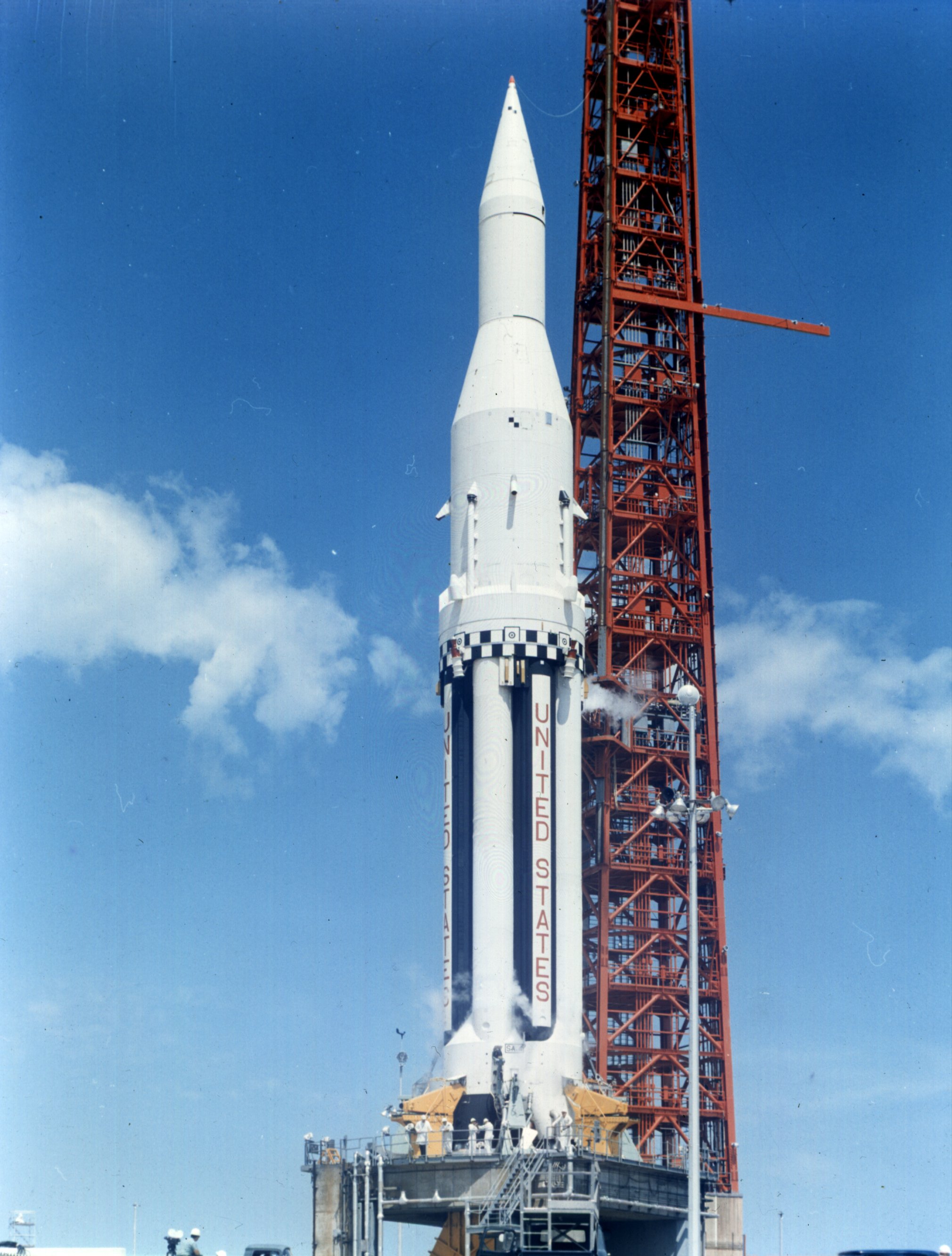
Saturn I

The first Saturn, proving clustered engines and liquid hydrogen.

The Saturn I was a rocket designed as the United States' first medium lift launch vehicle for up to 20,000-pound (9,100 kg) low Earth orbit payloads.

Height
55 m
Diameter
6.6 m
Liftoff mass
510 t
To low Earth orbit
9.1 t
To GTO
—
Liftoff thrust
6,700 kN
Launches here
10
Fully successful
10 (100%)
Reusable
No
See all 10 Saturn I launches ↓
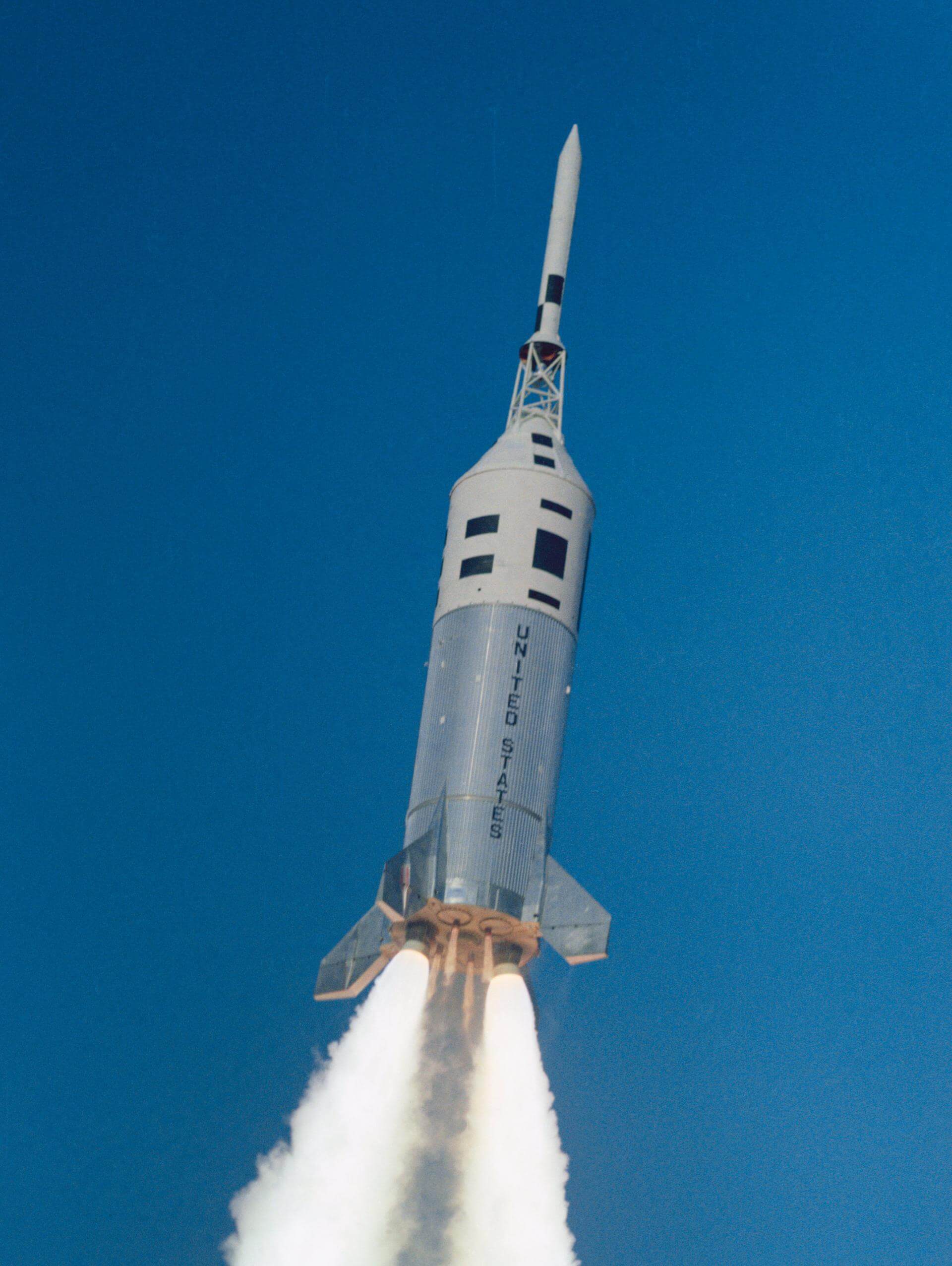
Little Joe II

1963 – 1972

Apollo tests

11 launches · 10 fully successful

American rocket used from 1963 to 1966 for five uncrewed suborbital tests of the Apollo spacecraft launch escape system and of the command module parachute recovery system in abort mode.

Height
26.2 m
Diameter
3.9 m
Liftoff mass
—
To low Earth orbit
—
To GTO
—
Liftoff thrust
—
Launches here
11
Fully successful
10 (91%)
Reusable
No
  • Apollo LM Ascent Stage: 6 launches
  • Little Joe II: 5 launches
See all 11 Apollo tests launches ↓
Titan II GLV

1965 – 1966

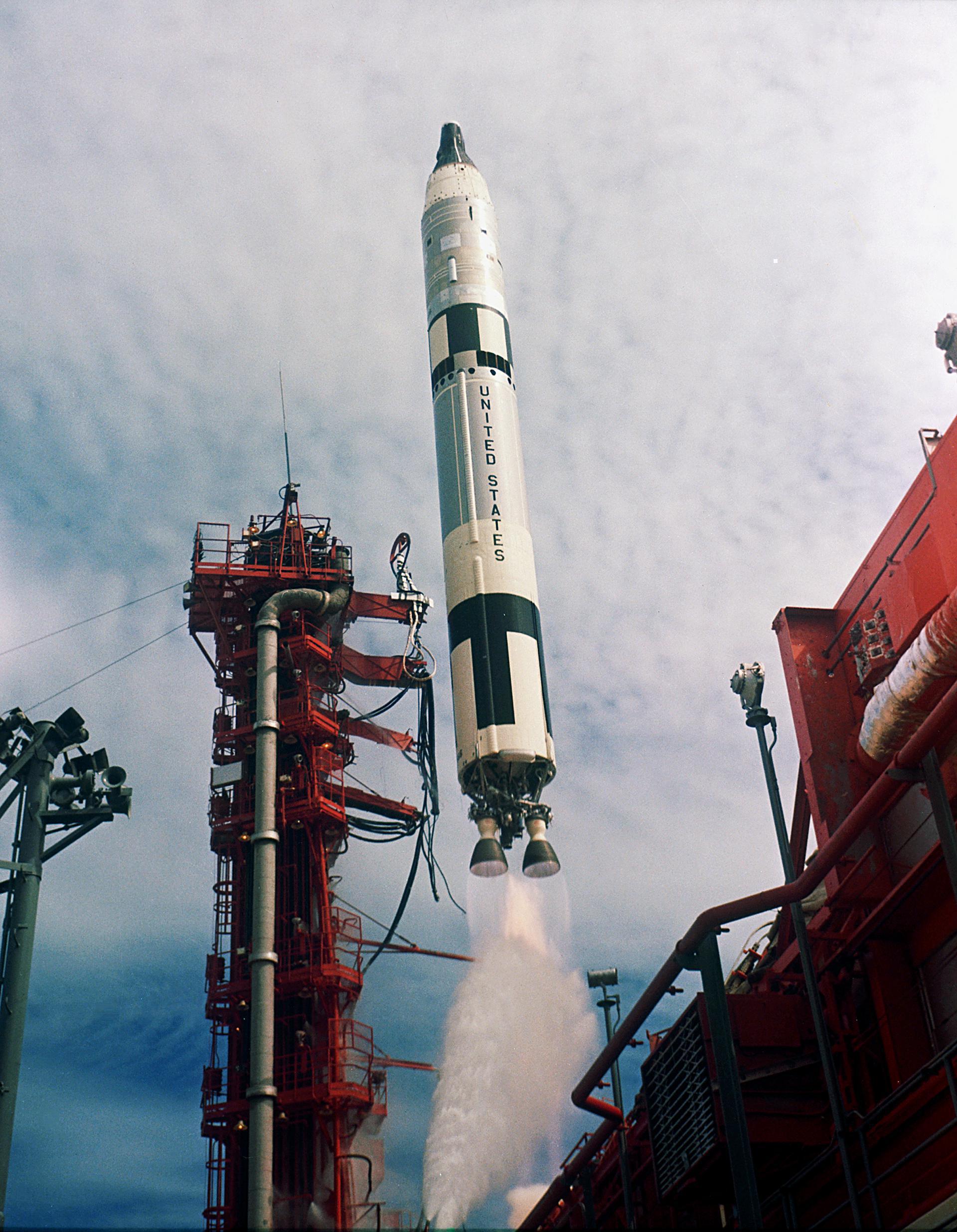
Gemini

A converted Titan II missile that flew ten two-person crews.

The Titan II GLV (Gemini Launch Vehicle) or Gemini-Titan II was an American expendable launch system derived from the Titan II missile, which was used to launch twelve Gemini missions for NASA between 1964 and 1966. Two unmanned launches followed by ten manned ones were conducted from Launch Complex 19 at the Cape Canaveral Air Force Station, starting with Gemini 1 on April 8, 1964.

Height
33.2 m
Diameter
3 m
Liftoff mass
154 t
To low Earth orbit
3.9 t
To GTO
—
Liftoff thrust
1,913 kN
Launches here
10
Fully successful
10 (100%)
Reusable
No
See all 10 Gemini launches ↓
Saturn IB

1966 – 1975

Saturn IB

Flew Apollo 7, the Skylab crews and the Apollo-Soyuz Test Project.

The Saturn IB (pronounced "one B", also known as the Uprated Saturn I) was an American launch vehicle commissioned by the National Aeronautics and Space Administration (NASA) for the Apollo program. It replaced the S-IV second stage of the Saturn I with the much more powerful S-IVB, able to launch a partially fueled Apollo Command/Service Module (CSM) or a fully fueled Lunar Module (LM) into low Earth orbit for early flight tests before the larger Saturn V needed for lunar flight was ready.

Height
43.2 m
Diameter
6.6 m
Liftoff mass
590 t
To low Earth orbit
21 t
To GTO
—
Liftoff thrust
7,100 kN
Launches here
10
Fully successful
9 (90%)
Reusable
No
See all 10 Saturn IB launches ↓
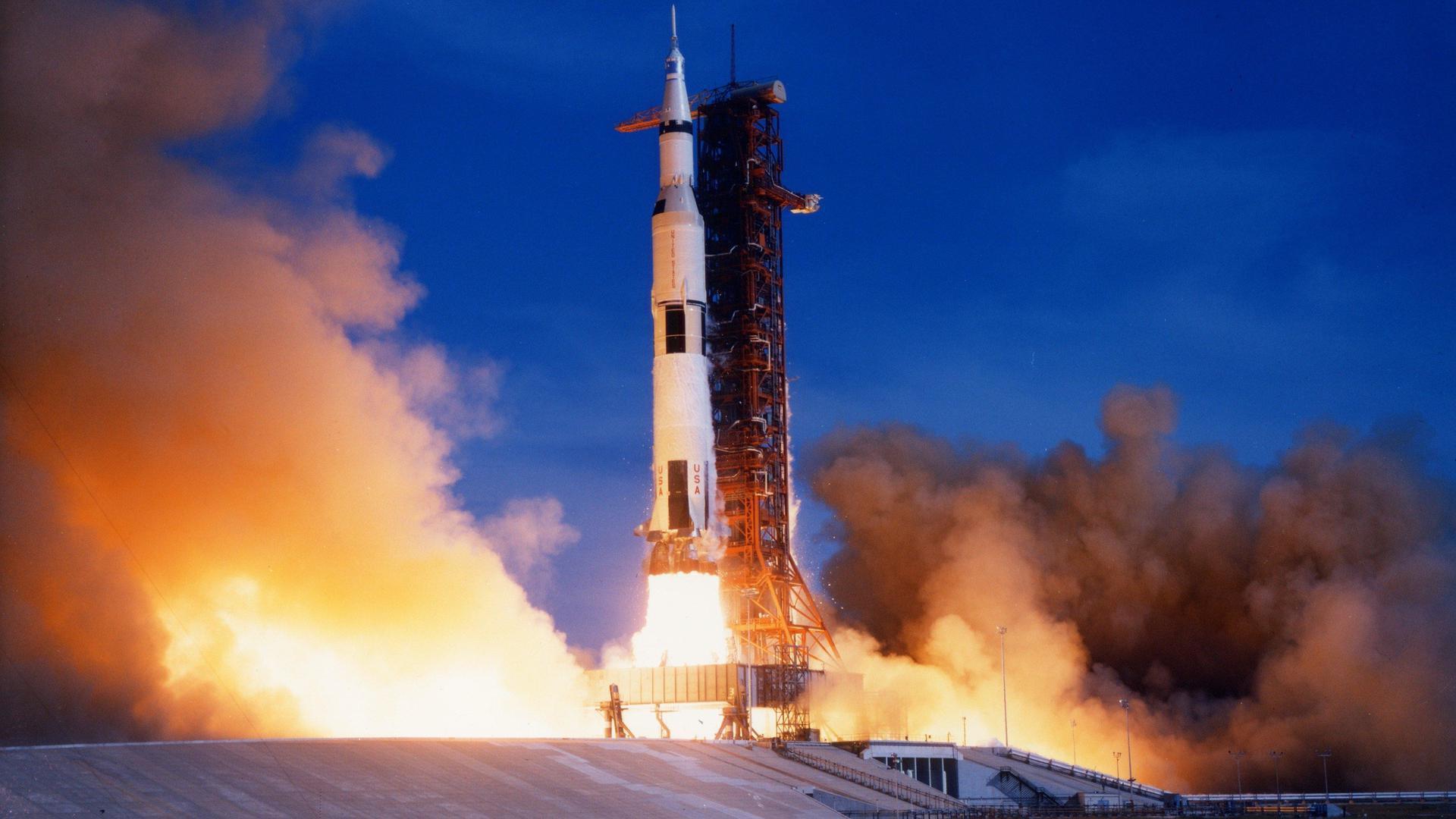
Saturn V

1967 – 1973

Saturn V

Still the most powerful rocket NASA has flown to completion; it took 24 people to the Moon.

The Saturn V was a human-rated expendable rocket used by NASA between 1967 and 1973. Most notably, the Saturn V took the Apollo program to the Moon. It still remains the world's tallest, heaviest, and most powerful rocket ever brought to operational status and is the only launch vehicle to take humans beyond LEO.

Height
111 m
Diameter
10.1 m
Liftoff mass
2,970 t
To low Earth orbit
140 t
To GTO
—
Liftoff thrust
35,100 kN
Launches here
13
Fully successful
12 (92%)
Reusable
No
See all 13 Saturn V launches ↓
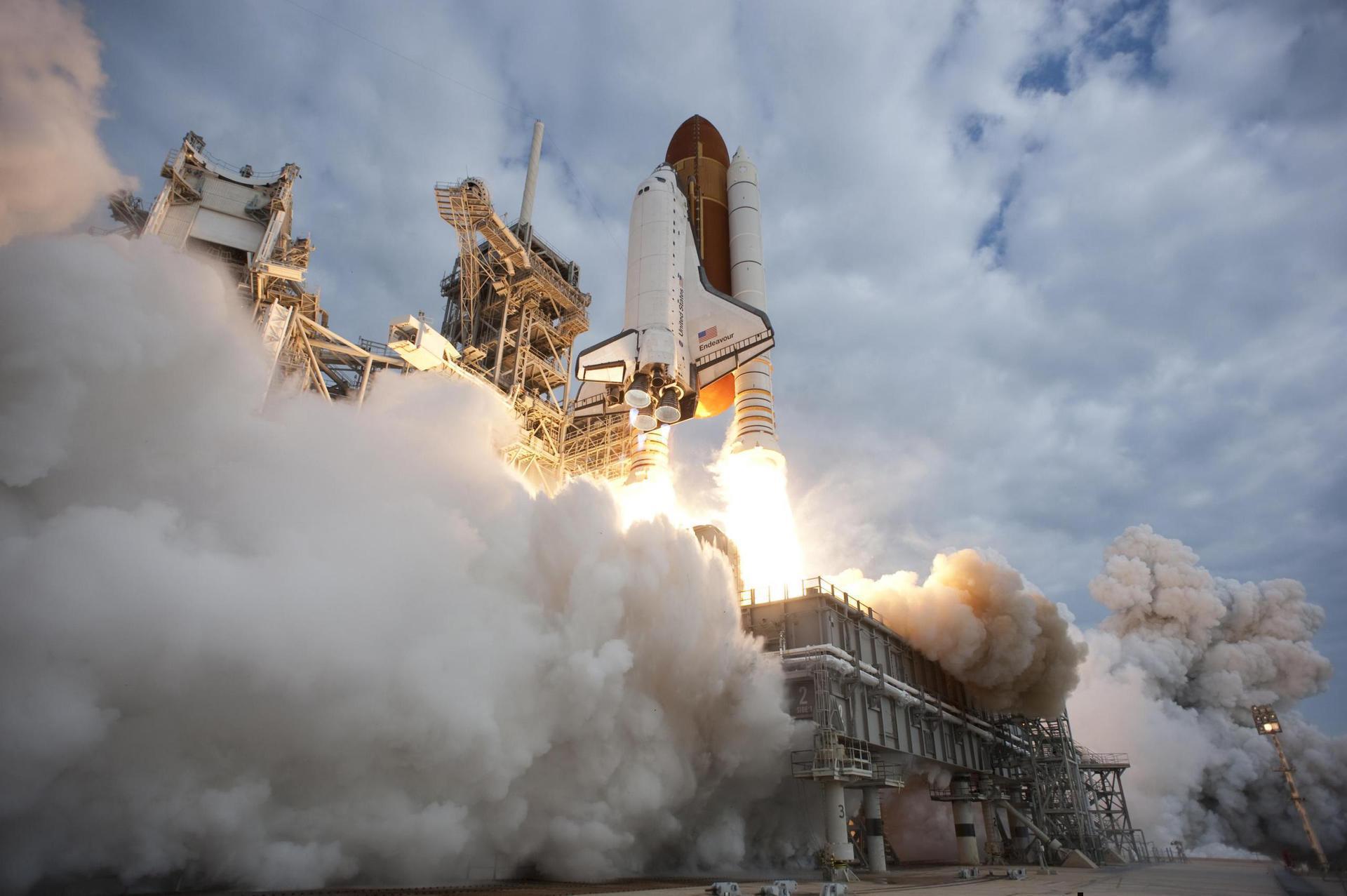
Space Shuttle

1981 – 2011

Space Shuttle

Reusable orbiter, external tank and two solid boosters: 135 missions over 30 years.

The Space Shuttle is a retired, partially reusable low Earth orbital spacecraft system operated from 1981 to 2011 by the U.S. National Aeronautics and Space Administration (NASA) as part of the Space Shuttle program. Its official program name was Space Transportation System (STS). Five complete Space Shuttle orbiter vehicles were built and flown on a total of 135 missions from 1981 to 2011.

Height
56.1 m
Diameter
8 m
Liftoff mass
2,030 t
To low Earth orbit
27.5 t
To GTO
—
Liftoff thrust
28,200 kN
Launches here
135
Fully successful
133 (99%)
Reusable
Yes
See all 135 Space Shuttle launches ↓
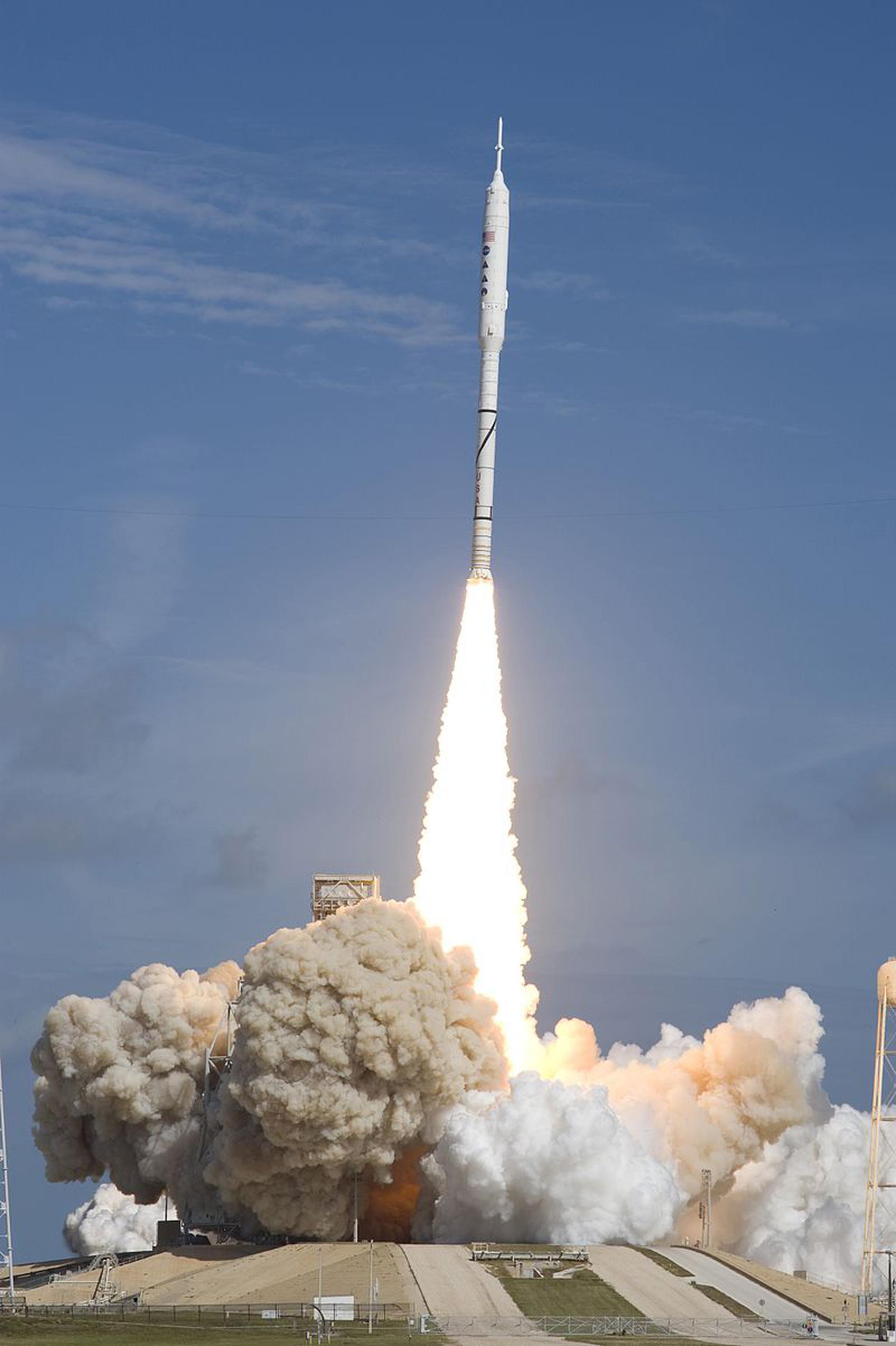
Ares I-X

2009 – 2019

Constellation

2 launches · 2 fully successful

Ares I was the crew launch vehicle that was being developed by NASA as part of the Constellation program. Ares I-X was a design concept demonstrator, that had a dummy second stage and a partially functional first stage.

Height
99.7 m
Diameter
3.7 m
Liftoff mass
816 t
To low Earth orbit
—
To GTO
—
Liftoff thrust
12,000 kN
Launches here
2
Fully successful
2 (100%)
Reusable
No
  • Ares I-X: 1 launch
  • Orion Abort Test Booster: 1 launch
See all 2 Constellation launches ↓
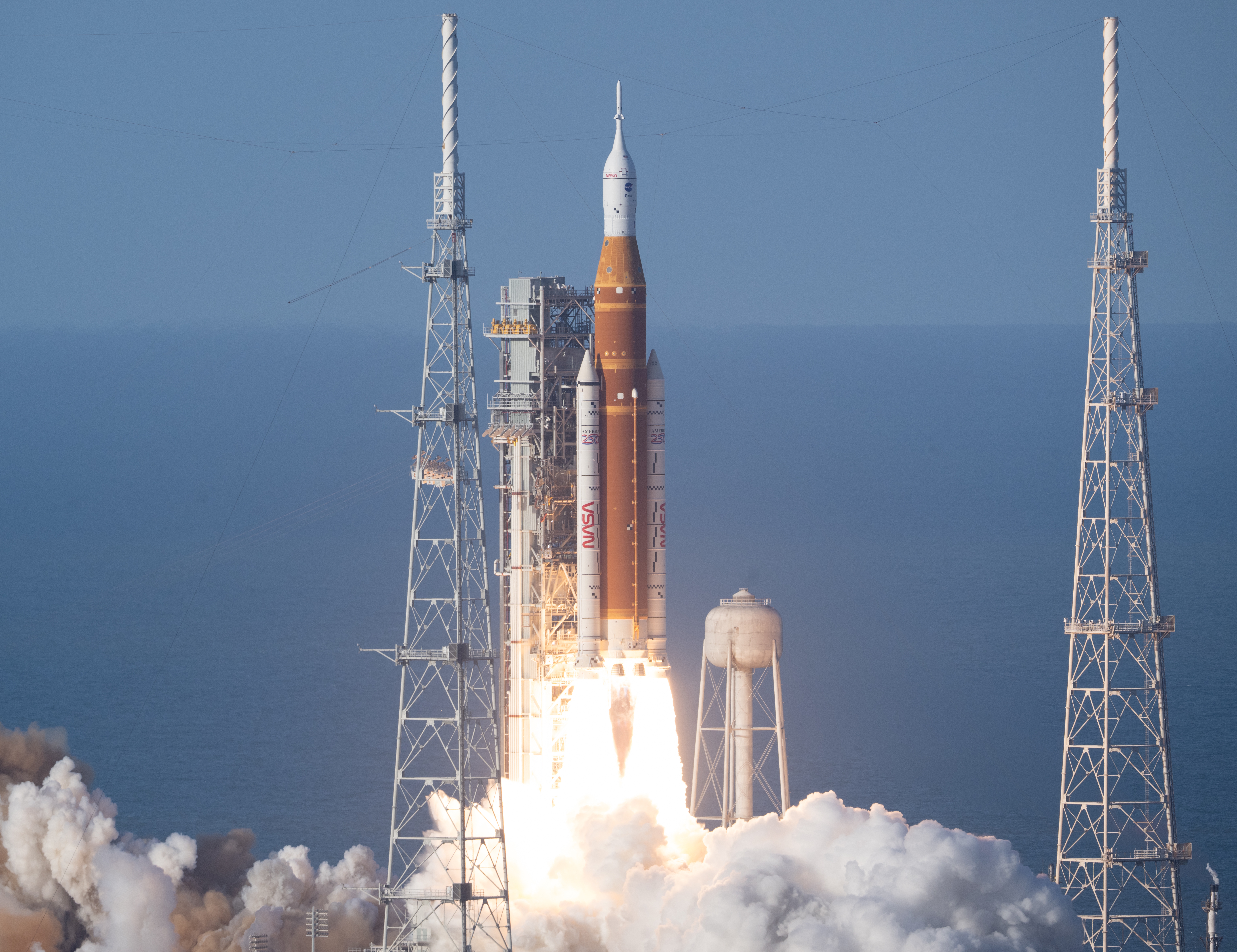
Space Launch System Block 1
NASA/Joel Kowsky

2022 – today

Space Launch System

The rocket of Artemis, built to send Orion and its crew to the Moon.

The Space Launch System (SLS) is an American Space Shuttle-derived heavy expendable launch vehicle. It is part of NASA's deep space exploration plans including as the main launch vehicle of the Artemis program. SLS follows the cancellation of the Constellation program, and is to replace the retired Space Shuttle.

Height
98 m
Diameter
8.4 m
Liftoff mass
2,628 t
To low Earth orbit
95 t
To GTO
—
Liftoff thrust
39,000 kN
Launches here
2
Fully successful
2 (100%)
Reusable
No
See all 2 Space Launch System launches ↓

Launch archive

Every NASA launch

Tap a rocket to open its launches. Every launch has its own page with the mission, outcome, failure details and video where one exists.
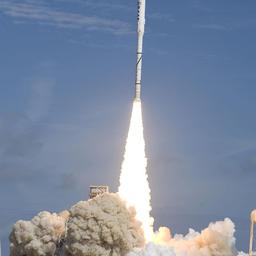
1958 – 1967

Early science rockets

16 launches · 12 successful
1959 – 1963

Mercury

24 launches · 15 successful
1960 – 1992

Scout

42 launches · 38 successful
About this rocket ↑
19921 launch
19881 launch
19792 launches
19781 launch
19761 launch
19752 launches · 1 not fully successful
19743 launches
19723 launches
19713 launches
19702 launches
19683 launches
19671 launch
19661 launch
19653 launches
19645 launches
19631 launch
19623 launches
19614 launches · 2 not fully successful
19602 launches · 1 not fully successful
1961 – 1965

Saturn I

10 launches · 10 successful
1963 – 1972

Apollo tests

11 launches · 10 successful
1965 – 1966

Gemini

10 launches · 10 successful
1966 – 1975

Saturn IB

10 launches · 9 successful
1967 – 1973

Saturn V

13 launches · 12 successful
1981 – 2011

Space Shuttle

135 launches · 133 successful
About this rocket ↑
20113 launches
20103 launches
20095 launches
20084 launches
20073 launches
20063 launches
20051 launch
20031 launch · 1 not fully successful
20025 launches
20016 launches
20005 launches
19993 launches
19985 launches
19978 launches
19967 launches
19957 launches
19947 launches
19937 launches
19928 launches
19916 launches
19906 launches
19895 launches
19882 launches
19862 launches · 1 not fully successful
19859 launches
19845 launches
19834 launches
19823 launches
19812 launches
2009 – 2019

Constellation

2 launches · 2 successful
2022 – 2026

Space Launch System

2 launches · 2 successful
2010 – 2026

NASA missions on partner rockets

55 launches · 55 successful

NASA science, crew and cargo missions launched by other companies. Each links to its full page in that company's section.

20267 launches
202510 launches
202417 launches
20238 launches
20223 launches
20213 launches
20202 launches
20132 launches
20112 launches
20101 launch

Data as of 2026-11-24 from Launch Library 2.