Rocket Launch Archive

Vehicle

Starship

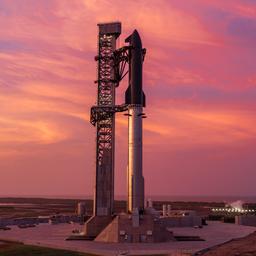
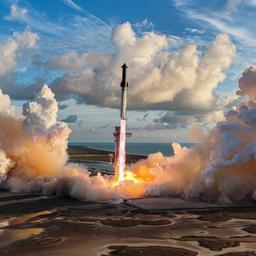
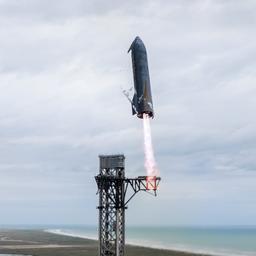
Every Starship prototype that left the ground, from a water-tower-shaped hopper to a ship caught by its own launch tower. Start with the rocket guide to see how each version changed, or jump to the flights.

Rocket guide

How Starship evolved

From an 18 m hopper to a 124 m rocket that reaches orbit and lands back on its tower. Every vehicle below is drawn to the same scale, with a Falcon 9 for comparison. Tap one to read about it.

0 m20 m40 m60 m80 m100 m120 mFalcon 9Starhopper~18 mSN5 & SN6~20 mSN8 – SN1550 mStarship Block 1~121 mStarship Block 2~123 mStarship V3~124 mperson
1 Raptor

2019

Starhopper

A flying water tower

Starhopper was a squat stainless-steel test rig with one Raptor engine and three stubby legs. It was never meant to go high. Its job was to prove the brand-new methane-fuelled Raptor could lift a steel vehicle, steer it, and set it back down. It started with a nose cone, but wind blew it off during construction, which is why it flew with a flat top.

Height
~18 m
Width
9 m
Engines
1 × Raptor
Highest flight
~150 m
Fuel
Liquid methane + oxygen
Body
Stainless steel
  • First flight of a full-size Raptor engine.
  • Stainless steel instead of carbon fibre: cheaper, and it gets stronger when super-cold.
  • Retired after two free flights in 2019.
See the flight ↓
1 Raptor

2020

SN5 & SN6

Full-size tanks take a hop

SN5 and SN6 were the first full 9-metre-wide Starship tank sections to fly: just the tanks, one Raptor and a block of weight on top, with no nose or flaps. Each made a single 150 m hop, showing that the real-size tanks could survive flight and landing.

Height
~20 m
Width
9 m
Engines
1 × Raptor
Highest flight
~150 m
Flights
1 each
Nicknamed
"Flying grain silo"
  • What changed from Starhopper: the real 9 m tank design instead of a test rig.
  • Same single engine.
See all 2 flights ↓
3 Raptors (sea-level)

2020 – 2021

SN8 – SN15

Belly-flop and flip

SN8 to SN15 were the first full Starship upper stages: 50 m tall with a nose cone, three Raptors and four flaps. They climbed to about 10 km, shut down their engines, and fell back sideways like a skydiver, steering with the flaps. Just above the ground they relit, flipped upright and tried to land. Four of the five crashed or exploded before SN15 stuck the landing.

Height
50 m
Width
9 m
Engines
3 × Raptor
Highest flight
10 – 12.5 km
Steering
4 flaps, 2 front, 2 back
Landing
Flip + engine burn
  • Three engines instead of one, plus a nose cone and flaps.
  • Small header tanks in the nose hold fuel for landing; problems with them caused several crashes.
  • SN15 carried hundreds of fixes and landed intact in May 2021.
See all 5 flights ↓
Booster: 33 Raptors (3 + 10 + 20)
Ship: 3 sea-level + 3 vacuum (blue)

2023 – 2024

Starship Block 1

The full stack flies

Block 1 put the Starship upper stage on top of Super Heavy, a 69 m booster with 33 Raptor engines, making the tallest and most powerful rocket ever flown. From Flight 2 on, a vented ring between the stages let the ship light its engines while still attached ("hot staging"). The booster has grid fins for steering on the way down and small pins so the launch tower's arms can catch it.

Height
~121 m
Width
9 m
Booster engines
33 × Raptor 2
Ship engines
3 sea-level + 3 vacuum
Liftoff thrust
~74 MN
Flights
1 – 6
  • What changed from SN15: a giant booster underneath, and 3 vacuum engines added to the ship for space.
  • Hot-staging ring added after Flight 1.
  • Flight 5 (Oct 2024): first booster caught by the tower.
See all 6 flights ↓
Booster: 33 Raptors (3 + 10 + 20)
Ship: 3 sea-level + 3 vacuum (blue)

2025

Starship Block 2

A taller ship

Block 2 stretched the ship by about 2 m to carry more propellant, moved the front flaps further back and made them smaller to keep them out of the worst reentry heat, and rebuilt the wiring and fuel lines. The first two Block 2 ships were lost during their climb to fire and engine problems, before Flights 10 and 11 flew cleanly.

Height
~123 m
Width
9 m
Booster engines
33 × Raptor 2
Ship engines
3 sea-level + 3 vacuum
Ship length
~52 m
Flights
7 – 11
  • Longer ship with more propellant.
  • Smaller front flaps moved toward the back of the nose.
  • First payload deployment (Starlink simulators) on Flight 10.
See all 5 flights ↓
Booster: 33 Raptors (3 + 10 + 20)
Ship: 3 sea-level + 3 vacuum (blue)

2026 – today

Starship V3

Raptor 3 and real missions

V3 is the version meant to do real work. It uses Raptor 3, a simpler and more powerful engine with much of its plumbing built into the engine itself so it no longer needs a heat shield around it. The booster gets three larger grid fins and a built-in hot-staging ring, and V3 launches from Starbase's second pad. On Flight 14 it reached orbit for the first time, and on Flight 15 the tower caught a ship.

Height
~124 m
Width
9 m
Booster engines
33 × Raptor 3
Ship engines
3 sea-level + 3 vacuum
Grid fins
3, larger
Flights
12 – today
  • Raptor 3 engines: fewer parts, more thrust.
  • First orbit (Flight 14) and first ship caught by the tower (Flight 15).
  • Carries real Starlink V3 satellites.
See all 4 flights ↓

Flight archive

Every Starship flight

Tap a group to open its flights. Each flight has its path, timeline, video and what went right and wrong.

2019 – 2020

Early hops

3 flights · 3 fully successful
2020 – 2021

SN high-altitude tests

5 flights · 1 fully successful
2023 – 2024

Block 1: Flights 1–6

6 flights · 3 fully successful
2025

Block 2: Flights 7–11

5 flights · 2 fully successful
2026 – today

V3: Flights 12–15

4 flights · 1 fully successful